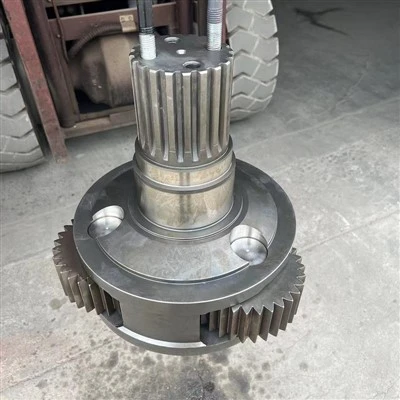
As a trusted supplier of Excavator Gear Pump, I often receive inquiries from customers regarding the ability of our pumps to handle different viscosities of oil. This is a crucial question, as the viscosity of the hydraulic oil can significantly impact the performance and longevity of the excavator gear pump. In this blog post, I will delve into the technical details of how an excavator gear pump interacts with oil of various viscosities and provide insights based on our extensive experience in the industry.
Understanding Viscosity and Its Importance
Viscosity is a measure of a fluid's resistance to flow. In the context of hydraulic systems, it is a critical property that affects how well the oil can transfer power, lubricate moving parts, and maintain a stable film between surfaces. The viscosity of hydraulic oil is affected by temperature; as the temperature increases, the oil becomes less viscous, and as it decreases, the oil becomes more viscous.
Maintaining the right viscosity is essential for the efficient operation of an excavator gear pump. If the oil is too thin (low viscosity), it may not provide adequate lubrication, leading to increased wear and tear on the pump's gears and bearings. This can result in premature failure and costly repairs. On the other hand, if the oil is too thick (high viscosity), it can cause excessive resistance to flow, which may lead to increased power consumption, reduced pump efficiency, and even cavitation.


How an Excavator Gear Pump Works
Before we discuss how the pump handles different viscosities, let's briefly understand how an excavator gear pump operates. A gear pump consists of two meshing gears housed in a closely fitting casing. As the gears rotate, they create a partial vacuum at the inlet port, which draws the hydraulic oil into the pump. The oil is then carried between the teeth of the gears to the outlet port, where it is forced out under pressure.
The design of the gear pump relies on a precise clearance between the gears and the casing to ensure efficient operation. This clearance is carefully engineered to maintain a proper seal and prevent the oil from leaking back to the inlet side. The performance of the pump is highly dependent on the ability of the oil to fill this clearance and provide a continuous flow of fluid.
Handling Different Viscosities
Our excavator gear pumps are designed to operate within a specific viscosity range. This range is determined by the manufacturer based on the pump's design, materials, and intended application. In general, most excavator gear pumps can handle viscosities between 10 and 400 centistokes (cSt) at operating temperature.
- Low Viscosity Oil: When using low viscosity oil, the oil flows more easily through the pump. This can result in a lower pressure drop across the pump and reduced power consumption. However, if the viscosity is too low, the oil may not be able to form a sufficient lubricating film between the gears and the casing. This can cause metal-to-metal contact, leading to increased wear and potential damage to the pump. In extreme cases, low viscosity oil can also cause internal leakage, reducing the pump's volumetric efficiency.
- High Viscosity Oil: High viscosity oil has a greater resistance to flow. This means that the pump has to work harder to move the oil through the system, resulting in increased power consumption. The thick oil may also cause the pump to experience cavitation, a phenomenon where vapor bubbles form in the oil due to low pressure. These bubbles can collapse suddenly, creating shock waves that can damage the pump's components. Additionally, high viscosity oil may not flow evenly through the pump, leading to uneven wear and reduced overall performance.
Factors Affecting the Pump's Ability to Handle Viscosity
Several factors can influence how well an excavator gear pump can handle different viscosities of oil:
- Pump Design: The design of the pump, including the size and shape of the gears, the clearance between the gears and the casing, and the flow passages, can affect its ability to handle different viscosities. Pumps with larger clearances may be more tolerant of high viscosity oil, while pumps with tighter clearances may perform better with lower viscosity oil.
- Operating Temperature: As mentioned earlier, temperature has a significant impact on the viscosity of the oil. It is important to choose an oil with a viscosity that is suitable for the expected operating temperature range of the excavator. In cold environments, a lower viscosity oil may be required to ensure proper flow, while in hot environments, a higher viscosity oil may be necessary to maintain adequate lubrication.
- System Pressure: The system pressure also plays a role in the pump's ability to handle different viscosities. Higher pressures can increase the force required to move the oil through the pump, which may make it more difficult for the pump to handle high viscosity oil.
Selecting the Right Oil Viscosity
Choosing the right oil viscosity for your excavator gear pump is crucial for optimal performance and longevity. Here are some guidelines to help you make the right selection:
- Refer to the Manufacturer's Recommendations: The manufacturer of the excavator or the gear pump will typically provide recommendations for the appropriate oil viscosity. Always follow these recommendations to ensure that the pump operates within its designed specifications.
- Consider the Operating Conditions: Take into account the temperature and pressure conditions in which the excavator will be operating. If the excavator is used in a cold climate, choose an oil with a lower viscosity to ensure easy starting and proper flow. If it is used in a hot climate or under heavy loads, a higher viscosity oil may be necessary.
- Regularly Monitor the Oil: Check the oil regularly for signs of degradation, such as changes in color, consistency, or odor. If the oil becomes too thick or thin, it may need to be replaced.
Our Range of Hydraulic Pumps and Repair Parts
At our company, we offer a comprehensive range of Excavator Hydraulic Pump Assembly and Hydraulic Pump Repair Parts to meet the needs of our customers. Whether you need a new pump or replacement parts for an existing one, we have you covered. Our products are designed and manufactured to the highest quality standards, ensuring reliability and performance in even the most demanding applications.
In addition to our excavator gear pumps, we also offer Fan Hydraulic Pump for cooling systems. These pumps are designed to provide efficient and reliable operation, helping to maintain the optimal temperature of the hydraulic fluid and other critical components.
Contact Us for More Information
If you have any questions about our excavator gear pumps or need assistance in selecting the right oil viscosity for your application, please don't hesitate to contact us. Our team of experts is always ready to provide you with the information and support you need. We offer competitive pricing, fast delivery, and excellent customer service, making us your preferred choice for all your hydraulic pump needs.
References
- Hydraulic Institute. (n.d.). Hydraulic Pump Handbook.
- Parker Hannifin Corporation. (2018). Hydraulic Fluids and Lubrication.
- Eaton Corporation. (2020). Hydraulic Pump Selection Guide.